Sarah Ginns, Research and Policy Lead, Forum Strategy
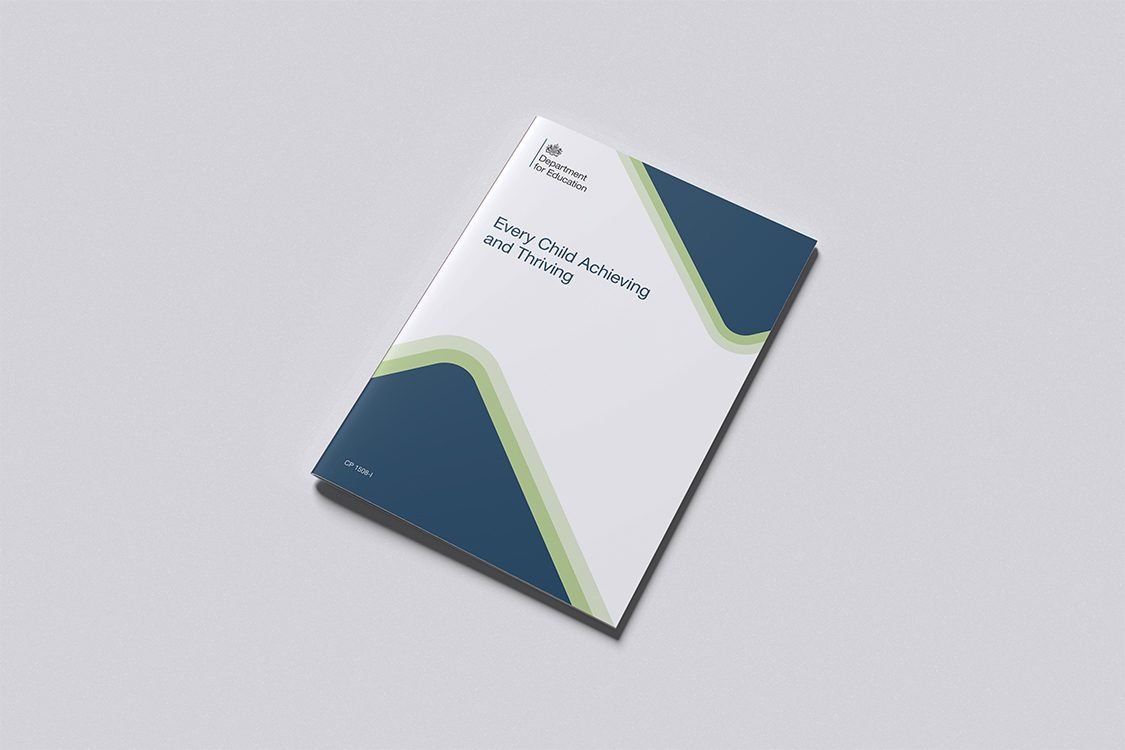
Following Monday’s publication by the DfE of the much-anticipated Schools White Paper – ‘Every Child Achieving and Thriving’ – we published this article expressing our disappointment at what we feel is missing, mostly in terms of a strategic and long-term approach to SEN reform coupled with the crisis in school readiness.
That being said, the White Paper was sprinkled with some seeds of hope for academy trusts, providing they are underpinned by the necessary strategic and operational connectedness from the DfE. History tells us this may be a pipe dream, but in the spirit of positivity this new article considers how these ‘seeds’ may be supported to germinate.
We’re still missing the how and when of a trust-led system
Firstly, the expectation for all schools to either form or join a trust – having supported the CEOs of academy trusts for over a decade and seen the impact that well-led and high-quality community-centred trusts can have on outcomes for pupils and their wider communities, we would of course welcome this. However, we’ve been here before – Nicky Morgan 2016 and Nadhim Zahawi 2022 anyone? – and with no proposals around timelines and no expectation on how schools will be compelled to join trusts, 2026’s White Paper risks being yet another diversion. A further complication is the proposal for local authorities or area partnerships to be able to establish trusts; potentially leading to another clunky dichotomy in our school system. One could ask, is this a proposal included to placate some on the backbenches and Labour councillors, because it feels a big ask in terms of capacity and co-ordination? Again, this is not the first time such a suggestion has been made, so as ever the devil will be in the detail; not least in forthcoming policies from the DfE about potential conflicts of interest.
Implications for academy trust boards and execs: Consider how you ‘make the case’ to those schools that may express an following this development. Remember this is about an authentic narrative and the genuine value that can be demonstrated through the model. This Forum Strategy resource may help: Forum-Strategy-Thriving-Trust-Thinkpiece-1-Making-The-Case-.pdf . It is also important that trusts continue to maintain and invest sufficient time and energy into positive and constructive relationships with LAs at this time. Here’s a great case study: Building effective relationships with Local Authorities as trust leaders: An interview with Marc Doyle | Forum Strategy
Community-centred trusts
We broadly welcome the government’s proposal to introduce new Trust Standards – in an overhaul of the school trust quality descriptions – with a renewed emphasis on standards, inclusion, value for money and “contributing willingly” to community collaboration. We have long banged the drum for trusts to sit at the heart of their communities and have published a number of case studies setting out how trusts in our #TrustLeaders networks are bringing this to life. However, we would again caution against the reductive measurement of community-facing activities – instead giving trusts and their boards the freedom to flex according to their communities’ needs and interests. Trusts will be encouraged to report on how they have supported stronger outcomes in their community role through annual public benefit reporting.
The Trust Standards – we are told – will draw on the most transformational sector practice: sharing excellence, spreading innovation, and lifting outcomes across communities. In terms of sharing excellence and spreading innovation, as we outlined at last year’s National #TrustLeaders Symposium, it is certainly the case that we need to see more trust to trust collaboration and the sharing of specialist expertise, if the sector is to overcome the key challenges of our times – not least technology adoption and curriculum innovation.
Implications for academy trust boards and execs: consider how you are a community-enabling trust, with a clear community identity and a clear sense of shared endeavour that invites others to work with you with purpose and impact. This resource may help: Michael-Pain-Speech-to-National-TrustLeaders-CEO-Conference-2025.pdf. Also consider how you are contributing to trust to trust support, learning from other trusts and providing support too. This resource: Time for trust leaders to be both bold and vulnerable | Forum Strategy and our content around system leadership, may be helpful: System Leadership | Forum Strategy
It’s also clear that the areas suggested as forming part of the new Trust Standards are well reflected in the Forum Strategy #ThrivingTrusts model, so paying close attention to these areas of development as we await the new standards will continue to provide a very sound reference point: Thriving Trusts Thinkpieces | Forum Strategy
Trust inspection
On the inspection of trusts, the White Paper’s reiteration of the proposals within the Children’s Wellbeing and Schools Bill for “proportionate, independent inspection” suggests the process should be less about checking for compliance and more on assessing and ensuring quality of provision across the trust. Again, there are no timelines for when the new inspections will be introduced, as this is dependent on development, testing and piloting by Ofsted. However, the White Paper does state that this work will include a “programme of engagement with the sector”. Note also the White Paper’s statement “Our ambition is that when trust inspection is established, and more schools join trusts, we will be able to reduce the burden of school-level inspection” (our emphasis).
Implications for trust boards and execs: keep an eye on developments, but don’t become defined by them. This won’t emerge in the short term, and there will be plenty of time for discussion and preparation around it when more details come forward.
A shift towards pure accountability
Finally, we’ve been pressing the trust sector for years on the need for and benefits of what we term ‘pure accountability’ – the focus of our upcoming National #TrustLeaders Symposium in June – as well as our more recent work on locality leadership. We’ve therefore been somewhat buoyed by the White Paper’s emphasis, mentioned above, on trusts demonstrating their involvement and impact in the local community – meaning trusts with a larger national footprint needing to achieve “coherence through local hubs or clusters.” Government will also consult on requiring school trusts to have local governance structures that together include all their schools, hold annual parental forums, and ensure boards hear directly from parents and school communities – all key underpinnings of community enabling pure accountability.
Further on these accountability shifts, a sense of belonging is a fundamental human need, so we are also pleased to see the White Paper state that by 2029 it will “expect every school to monitor pupils’ sense of belonging and engagement.” We know this sense of belonging underpins achievement at school and beyond; and look forward to seeing more detail in the DfE’s new Pupil Engagement Framework, expected later this year to support all schools to measure the key factors that determine their children’s engagement in education. However, important though this work is, it won’t make a difference if parents and carers expect to be ‘customers’ of their children’s educational experience and place all the onus on the school or trust. The ‘home-school partnership agreements’ used by some trusts, and ParentKind’s Parent Friendly Schools Accreditation are cited in the White Paper as examples which aim to redress the current imbalance. The proposal to establish minimum expectations that support the creation of meaningful home-to-school partnerships is welcomed, as is the commitment to consider how schools might adopt “meaningful, documented agreements” with families to strengthen shared expectations and responsibilities.
Implications for boards and execs: Consider the moves and shifts towards ‘pure accountability’ in the sector. Be clear as a board and exec about what pure accountability means, how it ensures vision is underpinned by formative accountability locally, and what it looks like in practice. This is a good place to start: In Practice Guide: Pure Accountability | Forum Strategy
In conclusion, there are some promising shifts around community-centred trusts and pure accountability – both topics we have advocated on for many years – in the new White Paper, in an otherwise underwhelming publication. The proof, as they say, will be in the pudding.
There are a wide-range of case studies on community-enabling trust leaders leadership in both the latest edition of #TrustLeaders magazine, which has been sent out to all our members, and via our membership website. There will be numerous others shared directly with our members in the coming weeks.
If you are interested in Forum Strategy supporting your boards and/or executive leaders’ development days, not least in light of the implications of the new white paper, please contact admin@forumstrategy.org . More information can be found here: Board Development | Forum Strategy