Sir Steve’s Blog
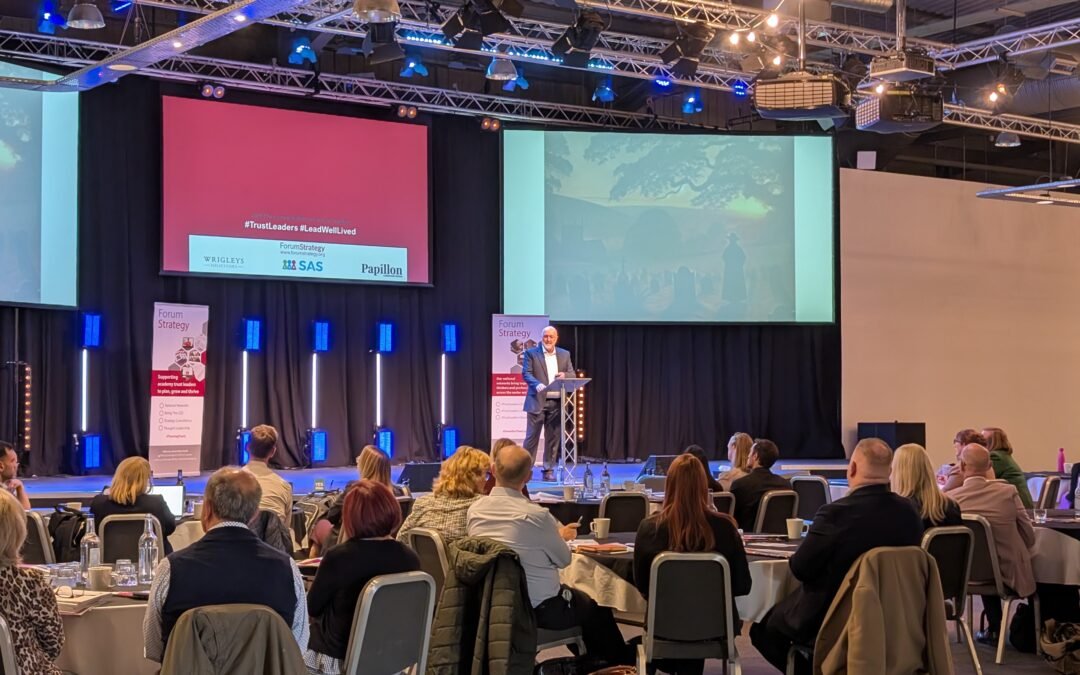
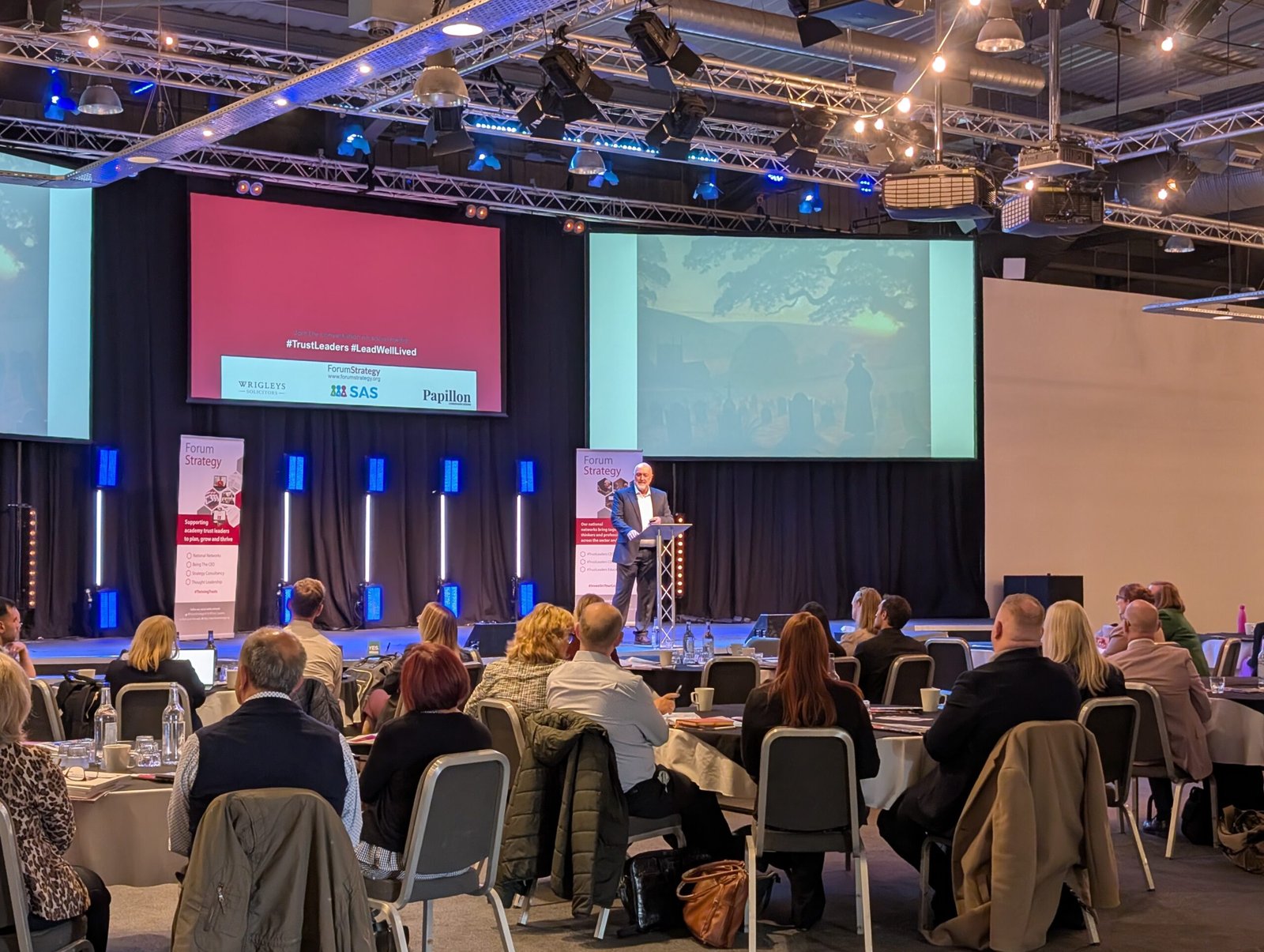
Reflections on the National #TrustLeaders CEO Conference 2026,
Sir Steve Lancashire is Chair of the National #TrustLeaders Network and co-leader of the Being The CEO programme. He also provides CEO and executive leader mentoring through Forum Strategy.
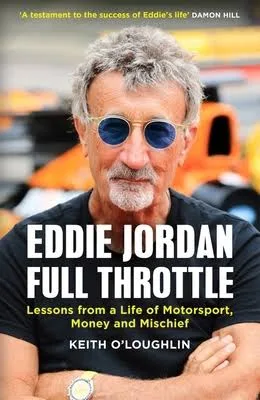
There was a moment during our National #TrustLeaders CEO Conference when Keith O’Loughlin, sharing lessons from the extraordinary life of his friend Eddie Jordan, offered a thought that has stayed with me over the weekend: more money than time. MMTT!
It’s an interesting proposition for a room full of CEOs. We spend a considerable amount of our professional lives worrying about money. We plan budgets, scrutinise forecasts, debate investment, search for efficiencies and try to make resources stretch further than they reasonably should. We are acutely aware of what we cannot afford. Yet there is one resource that none of us can replenish, however successful we become. Time. We can be forensic about a budget line and yet remarkably casual about an evening, a friendship or the balance of our lives. I found that a slightly uncomfortable thought. I suspect I was meant to.
Keith’s account of Eddie was about much more than a successful career in Formula One. It was about someone with an extraordinary appetite for life: backing himself, finding a way, spotting talent, building relationships and pursuing possibilities with energy and, it seemed to me, a healthy disregard for the idea that life should be approached too solemnly. That’s going to resonate, of course, with someone who slips an unknown 80s anthem about plastic into a leadership conference.
I loved the spirit of it. Eddie’s life was hardly a template for running a school trust; I imagine the first conversation with the audit committee might have been lively. But Keith reminded us that achievement and enjoyment are not opposing ambitions. We can take our work seriously without becoming terribly solemn about ourselves. More than that, we can enjoy the work itself: the improbable idea that takes flight, the person who surprises us, the moment a roomful of sensible people decides that something apparently impossible is worth trying.
We can be forensic about a budget line and yet remarkably casual about an evening, a friendship or the balance of our lives. I found that a slightly uncomfortable thought. I suspect I was meant to.
That is why I think Michael Pain got the positioning of the conference absolutely right. He deliberately resisted the temptation to make the focus wellbeing or a better work–life balance. Neither of those phrases are adequate to capture the complexity of what we were exploring. They both suggest that leadership and life sit on opposite sides of a set of scales, and that our task is simply to distribute our time more evenly between them. But leadership is part of our life. For many of us, it is a deeply meaningful part. It brings relationships, achievement, challenge, fulfilment and the extraordinary privilege of contributing to other people’s futures. We should not diminish that and by the end of the day I was less interested in treating leadership and life as two problems to be solved separately and more consumed with how well we embrace that duality. I was struck by how much we ask of ourselves in the name of doing our job well, and how rarely we stop to ask whether we are being as ambitious for our own lives as we are for the lives of those we serve.
That question took me back to my own contribution to the conference, where I reflected on the true potential of being the CEO. I wanted to move beyond the familiar descriptions of the role: the responsibilities, the accountabilities, the complexity, the pressure and, occasionally, the sheer absurdity of what can land on our desks. All of those things are real. But they are not, for me, what makes the role extraordinary.
Its extraordinary potential lies in the opportunity to alter what becomes possible for other people.
A CEO can recognise talent that circumstances have concealed. We can create opportunities that might otherwise never exist. We can move resources, change structures, build schools, bring people together and make things happen that would remain aspirations without someone prepared to turn them into reality. For a period of our lives, we are entrusted with authority that can change the course of other people’s lives. That is a remarkable privilege.
But it raises a question which became more insistent as the conference unfolded: what is worth spending that privilege on? Having the authority to act is a marvellous thing. Using it on whatever happens to be shouting loudest is a waste of that opportunity.
Ann Palmer’s opening challenged us to use our voice, courage and influence to help shape a future worthy of those who will inherit it. I loved her observation that history is not something we should wait to look back on but something we are making every single day, and we need to be present for it. Maggie Farrar’s exploration of purposeful leadership returned us to an equally searching personal question: what really matters to us? What would we stand up for, speak out for and remain committed to, even in the face of fear? These questions sound straightforward until we try to answer them honestly.
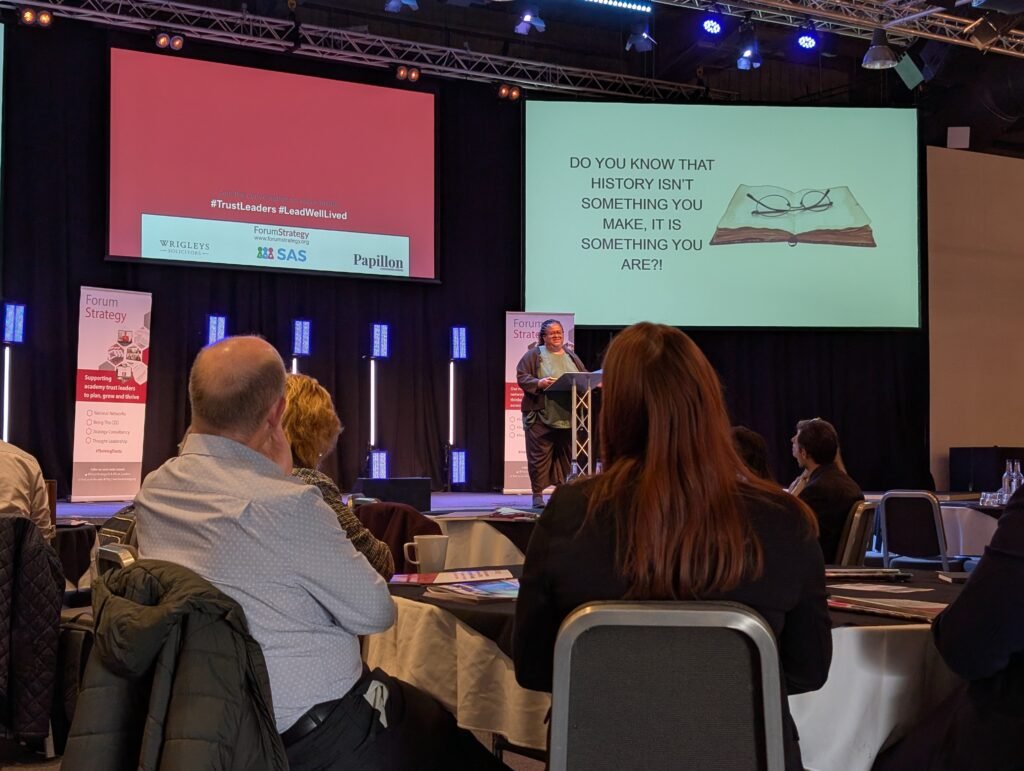
history is not something we should wait to look back on but something we are making every single day
As CEOs, we are surrounded by things that matter. The immediate needs of children. The wellbeing of staff. The expectations of communities. The sustainability of our organisations. The next inspection, the next financial challenge, the next policy announcement. Each arrives with its own claim on our attention, and some with a frankly irritating ability to present themselves as the most important thing in the world. But if everything matters equally, we have not established our purpose. We have simply described our workload. Purpose requires discernment: the willingness to decide what deserves our commitment, even when something else is demanding it rather noisily. It asks us to distinguish between the work that keeps an organisation going today and the work that might change what becomes possible tomorrow. And, occasionally, to admit that the very thing we have treated as indispensable may be nothing of the sort.
This is not simply a professional question. It is painfully personal. If I look back over my years as CEO, there are decisions I am immensely glad I made, opportunities I am proud we created and people whose achievements mean far more to me than anything I could put on my own CV. But there are also things I did not do, family occasions missed, too few of Sir Anthony Seldon’s ‘date nights’ and periods when I let the demands of the role make choices about my life that I ought to have made for myself. I know I am not alone. Purpose can become voracious. When the work matters deeply, almost any sacrifice can be made to sound noble. Sometimes sacrifice really is necessary; leadership in education is not a casual undertaking. But we should be wary of turning every demand into a moral obligation. A cause worth serving does not automatically deserve every hour we possess.
Yet knowing what deserves our commitment is only the beginning. We can spend an entire career articulating what matters without ever doing very much about it. I have met some extraordinarily articulate leaders who can describe the future in magnificent detail but seem rather reluctant to disturb the present. And that is one of the joys of being a CEO: sometimes we can actually do the thing. We can give away power, allow others to exercise judgement, make decisions and build things we might never have imagined, to help make a different reality possible. The conference pushed that ambition beyond the boundaries of our own organisations.
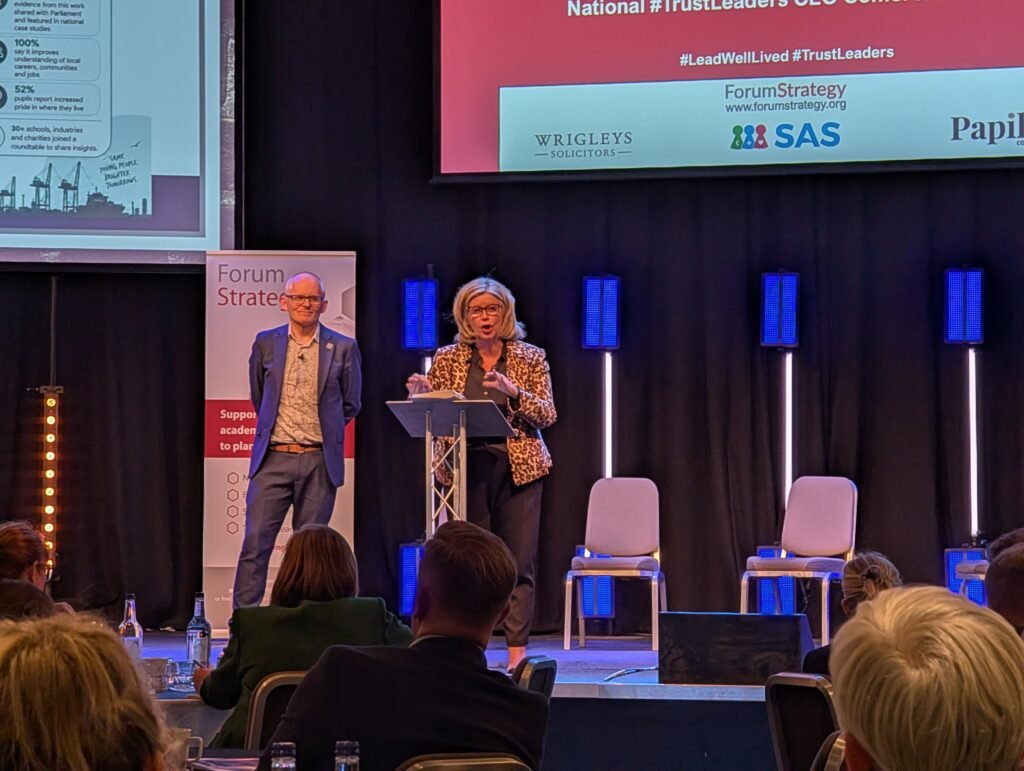
Katrina Morley and Sean Harris explored the moral endeavour of leadership through purpose, place and responsibility beyond place. Their argument that educational inequality cannot be addressed by education alone is an important challenge to those of us who have spent much of our professional lives trying to improve schools. We can lead an excellent trust and still find that the circumstances shaping children’s lives extend far beyond anything we directly control. Poverty does not stop at the school gate. Neither do poor housing, insecure employment, ill health or the absence of opportunity within a community. That does not make our work less important. It makes our ambition more demanding and I believe more exciting. At the heart of Katrina and Sean’s message was an invitation to reframe the lens on our own leadership and our own organisation and ask the question, ‘What might happen if we stopped asking only what our trust could do and began asking, what could happen when people across a place decided to do something together?’ Our organisations have influence, relationships, resources and convening power, but they are not the centre of every community’s story. The challenge is to use what we have without behaving as though we own the plot. Marino Charalambous’s contribution to the discussion of leadership as a moral endeavour kept the purpose of leadership beyond day-to-day organisational management in view and reminded us of what can become possible when we use our authority to bring people together, share responsibility and make room for others to contribute.
that is one of the joys of being a CEO: sometimes we can actually do the thing. We can give away power, allow others to exercise judgement, make decisions and build things we might never have imagined, to help make a different reality possible.
There is a personal counterpart to this which Keith’s account of Eddie brought into sharp focus. How often do we postpone things we want to do because the time is not quite right? When the trust is more secure. When the next challenge has passed. When we have recruited the right people. When we have finished the next phase of development. When the diary becomes a little less demanding. I have some disappointing news for anyone waiting for that final condition. The time is never right, and the diary is unlikely to volunteer. There will always be another challenge, another opportunity, another reason why now the moment is not quite right.
But our capacity to make choices about our own lives is also a form of agency. And, unlike the authority attached to the CEO role, it does not have to wait for that time to be right, we should not waste the agency we have to change other people’s lives. Nor should we waste the agency we have to live our own.
Leadership is not the elimination of risk. Some of the most consequential decisions we make begin precisely where certainty ends.
But knowing what matters and recognising our capacity to act does not guarantee that we will and Maggie Farrar bravely surfaced an issue not often discussed. Sometimes the obstacle to this is fear. Maggie’s contribution brought purpose and courage together in a way that I found particularly compelling. Courage is not the absence of fear or uncertainty. It is the capacity to remain grounded in our values and act purposefully despite those two things. I think this resonated beautifully with my own observations on the CEO being perfectly placed to take risks big enough to make a difference. We have become very sophisticated at managing risk. We identify it, quantify it, record it, colour-code it and reassure ourselves that it has been mitigated. All of which is necessary. But there is a point at which the risk register can become a very handsome account of why we never quite got round to doing the thing that mattered. Leadership is not the elimination of risk. Some of the most consequential decisions we make begin precisely where certainty ends. I spoke at the conference about Caspar David Friedrich’s Wanderer above the Sea of Fog. The figure in the painting has climbed high enough to see further than those below him, yet much of the landscape ahead remains hidden. There is something rather familiar about that image for a CEO. We are expected to have perspective. We are expected to make decisions. But a wider view does not confer certainty. The question is whether we can overcome the fear that Maggie referred to, find courage in the ways she described and then act because something matters enough, even though success cannot be guaranteed.
Keith’s account of Eddie offered a rather different expression of the same idea. Back yourself. Find a way. These are not instructions to be reckless. In education, we cannot gamble with other people’s futures in pursuit of our own excitement. But they are a challenge to the habit of treating the avoidance of failure as though it were the highest expression of responsible leadership. It is possible to leave an organisation having successfully avoided every significant risk and still have failed to pursue some of its greatest possibilities.
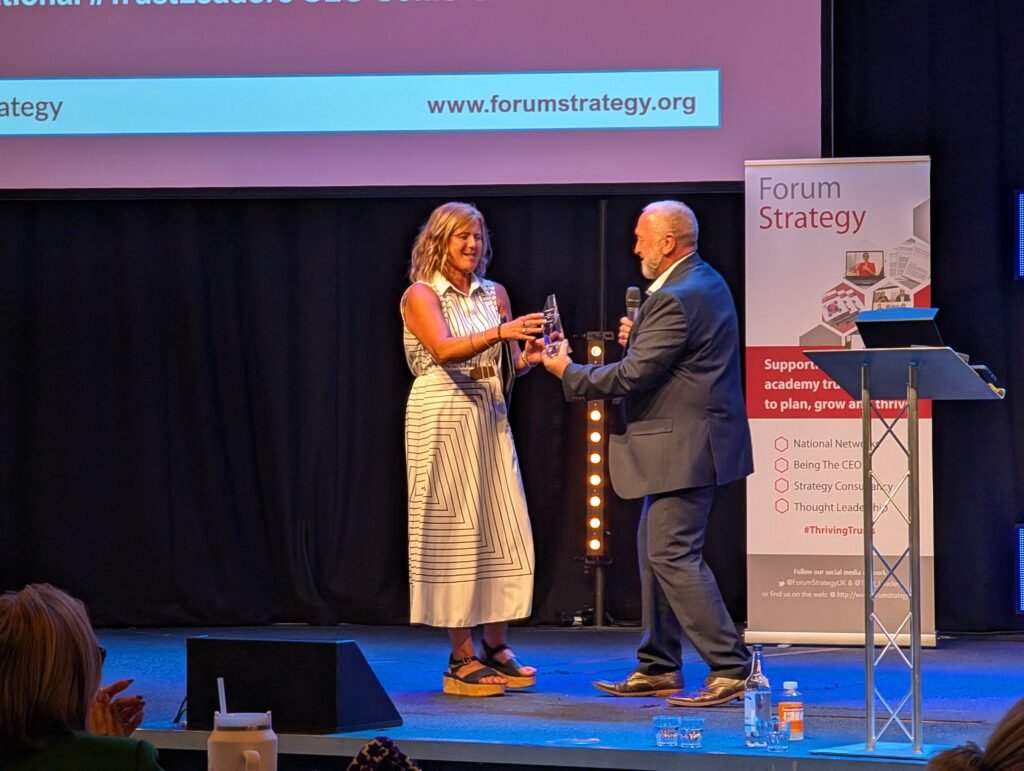
A life organised entirely around avoiding failure, embarrassment, uncertainty or loss can become terribly small. There are places we will never visit, people we will never meet, relationships we will never pursue and experiences we will never enjoy
And I think we should be equally honest about the personal dimension. A life organised entirely around avoiding failure, embarrassment, uncertainty or loss can become terribly small. There are places we will never visit, people we will never meet, relationships we will never pursue and experiences we will never enjoy if we insist on knowing in advance how everything will turn out. I am not suggesting that we should all attempt to live like Eddie Jordan. But his story challenges the assumption that the safest course is always the wisest one. Sometimes the risk lies in acting. Sometimes it lies in reaching the end of an opportunity and realising that we had the chance to try but didn’t.
The conference kept returning to the power of relationships. Keith spoke of spotting talent and backing people; Katrina and Sean reminded us that trusts cannot fulfil their moral purpose alone; and Sir Anthony Seldon brought us back to the relationships that sustain our own lives. For me, one of the greatest pleasures of leadership is seeing someone take an opportunity you helped create and run further with it than you ever could. Our success is not measured by how indispensable we become, but by what becomes possible for others because our lives intersected with theirs.
But relationships are not all about what we can achieve together. The people closest to us do not always need our advice, our solutions and certainly not our leadership. Sometimes they simply need our attention. To be a friend rather than a mentor. A partner rather than a CEO. To be present without needing to be useful. Perhaps a life well-lived is measured not only by the opportunities we create for others, but by the relationships we nurture along the way.
And that thought leads me to a question Sir Anthony Seldon asked during the conference which has also stayed with me: who looks after you? It is a question that can be surprisingly difficult for a CEO to answer. We are expected to look after our organisations, support our colleagues, respond to our communities and carry responsibility when things go wrong. There is often an assumption, sometimes one we encourage ourselves, that we will somehow manage the rest. Sir Anthony’s reflections on happiness and the elements of a fulfilling life reminded us of the importance of giving, relationships, exercise, awareness, learning, resilience, acceptance and meaning. GREAT DREAM. But it would be a travesty to reduce his contribution to the familiar message that leaders need to look after themselves so that they can continue to perform effectively. Of course, exhausted and isolated leaders are unlikely to bring their best judgement to difficult decisions. But must every pleasure be made to produce a measurable professional benefit before we allow ourselves to have it?
A CEO deserves a full life because they are human, not because a well-rested CEO is a more productive one. That distinction matters. If every aspect of our personal wellbeing has to be justified by its contribution to our professional effectiveness, we have not escaped the demands of the role. We have simply found another way to organise our lives around it. Exercise becomes a way to improve performance. Relationships become a source of resilience. Holidays become an opportunity to recharge before returning to work. Even joy can find itself recruited into the service of organisational improvement. I personally refuse to believe that everything delightful must eventually report to a committee. Surely there must be room in our lives for things that are valuable simply because we love them. Something that belongs to us, brings us joy, and has not been colonised by the job. Being a CEO can offer such an extraordinary sense of purpose that, if we are not careful, it gradually becomes the principal way we understand ourselves. Then, almost without noticing, we begin to measure the value of our days by how much we have accomplished in the role. The danger is not only exhaustion. It is forgetting that we were a person before we were a CEO and will remain one afterwards.
There will also be moments when choosing to protect our own lives means accepting that something professionally desirable may remain unfinished, but c’mon, what was good enough for Gaudi…
In my own keynote I borrowed Wordsworth’s daffodils as an image of the memories that restore us. My own equivalent, a gloriously ridiculous Hi-NRG record that takes me straight back to early teaching days, friends and London dance floors. His inward eye had daffodils; mine a synthesiser and an alarming quantity of PVC. Both, I would argue, have their merits and remind us that the rest of our lives is not merely the space left over once we have discharged our professional responsibilities. It has its own claims upon us. Its own relationships, possibilities, obligations and pleasures. And here is the tension I think the conference captured so well. Sometimes those claims will conflict. There will be moments when leadership genuinely demands more of us than we would wish to give. When a difficult decision, a crisis or an important opportunity requires personal sacrifice. There will also be moments when choosing to protect our own lives means accepting that something professionally desirable may remain unfinished, but c’mon, what was good enough for Gaudi…
We cannot always have everything. Every choice we make gives something priority and often asks us to leave something else behind. The challenge is to be more conscious of those choices: to know what really matters to us, rather than allowing the demands of the moment to decide for us. Purpose should help us recognise what deserves our time, our energy and our commitment and what does not. It should give us the courage to say yes to the things that matter, even when that means saying no to things that once seemed essential. And it should prompt us to ask a rather awkward question: if we are so good at making possibilities for other people, why are we sometimes so ready to close down the possibilities in our own lives?
Maggie’s exploration of courage generated, for me the question of the day; what are we prepared to give our lives to? Courage is not simply the willingness to take a risk or make a difficult decision. Sometimes it is the willingness to recognise that the life we are living is the only one we have, and to make choices worthy of it. That requires us to be brave enough to pursue what matters, honest enough to acknowledge what it costs, and wise enough to know when something we value must be left behind.
To return, in conclusion, to Keith’s final lesson from Eddie Jordan, more money than time is a deceptively simple observation, but perhaps the most unsettling of the day. We spend so much of our lives preparing for what comes next that we can forget this is the life we were preparing for. Eddie’s example was not a life without mistakes or regrets, but one lived with an extraordinary appetite for what it might hold.
One day, someone else will sit in our chair. The decisions that once seemed impossible to make without us will be made. The organisation will find its way forward. What will remain of our time will be found in the lives we touched, the possibilities we created and the moments when we had the courage to choose a life that was truly our own. Perhaps that is the final challenge of leadership well-lived: not simply to ask whether we made the most of the role, but whether we made the most of the life in which we were privileged to hold it.
Leadership is a temporary privilege. Life is not a rehearsal.
FTB.
Sir Steve Lancashire is Chair of the National #TrustLeader Network and co-leader of the Being The CEO programme. He also provides mentoring for CEOs and Executive Leaders through Forum Strategy.